Showing posts with label rome. Show all posts

Wednesday, January 13, 2016

Fact: Towards a History of Beards

Beards are so popular these days that scientists have proclaimed a moment 'peak beard.' They argue that having a beard is more attractive to women when the majority of men are clean shaven. (In the elegant language of science, beards are a "negative frequency-dependent sexual selection trait.") Because the proportion of bearded gentlemen increases daily, we will soon hit the point when the majority of men are bearded and so having a beard is no longer attractive. Stock up on razors, guys.

This idea of 'peak beardliness' got me thinking about the history of beards. The thing about beards, of course, is that they only exist because we shave them off. But why do we shave off beards more frequently than other facial or bodily hair? What does the beard mean? Is it a symbol of sophistication or barbarism? Why is having a beard so closely related to philosophers?  I remember back in college all of my philosophy major friends sported beards. Me, the lone English major of the lot, went clean shaven.

I'm nowhere close to figuring out answers to these questions. Instead I will offer some scattered facts.

For the ancient Egyptians, kings and queens alike wore a false metal beard called a postiche to connect them to the gods. The hieroglyphic for the divine is a seated man--wearing a false beard.

Egyptian False Beard
The ancient Greeks talked about their 'beardless boys'--to grow some stubble was a right of passage separating the boy and the man. In Homer, touching the beard is a sign of entreaty. Supposedly Alexander was the first clean-shaven monarch: a clean face was more militarily expedient (someone could grab hold of a warrior by his whiskers), and the fashion spread from him. The Latins rarely sported beards: the Grecophile Emperor Hadrian shocked contemporaries by letting his beard grow out in the Greek, philosophical manner.
Emperor Hadrian, the first bearded Emperor
Beards might symbolize the sophistication of the Greeks or of the philosophy major, but they could also be a sign of barbarism. The Lombards who took over Northern Italy in the 6th century were named for their long beards. (Longo bardi = long beards.) And our own cultural image of the pitiless viking would not be complete without a flowing full beard. (Isn't there some storyline in the Marvel comic Thor about why that normally bearded Norse god goes around as clean shaven as an accountant?)

Beardless Thor

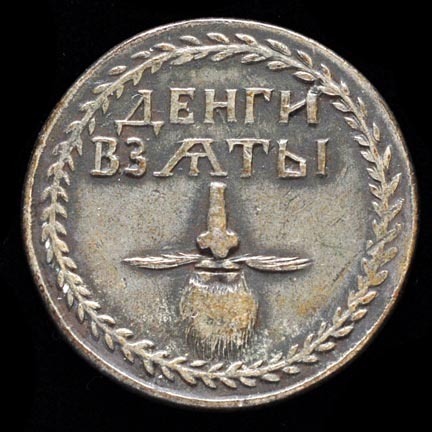
Jumping ahead to the 18th century, we continue to see beardiness as a symbol marking the boundaries of a culture. In Peter the Great's time, a big beard was a symbol of Russianess. Peter, in his efforts to push the country to more European lines, instituted a beard tax, going so far as to forcibly shave people who sported a beard in front of him. This did not go over well with the bearded boyars, who paid their taxes, and retained their beards after Peter's death.

Token showing that the owner had paid his beard tax

Monday, August 20, 2012

The Emperors Of Ice Cream


One of the most profound things I've ever seen took place on a guided tour of Queensland.  In amongst the usual touristic sights of natural beauty--the LOTR-worthy lakes, the picture-book rain forests, and the prehistoric cassowaries--we stopped to get ice cream.

One of my fellow tourists was a young woman toting a squint-faced newborn.  The new mother scooped some ice cream up in one of those diminutive plastic ice cream shovels, then held it out to the child.

The baby's lips puckered.  She blinked.  Once the ice cream was on her lips, there was a moment of tension.

"This is her first ice cream," mom drawled.

The baby's eyes grew as large as baby eyes can go.  She laughed.  She reached out before.  This new stuff--it was good!  This new stuff--it was more than good!  It was fantastic!

I felt lucky to watch this--a person realizing that existance is awesome enough to include ice cream.

On the face of it, ice cream seems like it must go hand-in-hand with the glories of electric refrigeration.   Human beings are a crafty bunch however, and our sweaty summers have been relieved by ice-cooled treats for at least four millennia.

The Chinese--first at everything--produced the earliest recorded ice confection, made by taking milk, overcooked rice, and spices, and throwing the mix all together with some fresh snow.  Yum!

The Chinese practice of mixing snow with sweets passed along to the Persians, who add fruit juice to snow to refresh themselves during the summer.  This is the origin of the word sherbet--a Persian word meaning 'he drank.'  From here, the technology passed on to Alexander the Great who--in addition to his usual claim to fame of having one of the largest land Empires ever, must add 'bringer of iced delicacies to Europe.'  Alexander's gift to the western world shows up again in the reign of the maligned Emperor Nero, whose bacchanals often were accompanied by refreshing mixtures of fruit juice and snow.

But where did the snow come from in the summer?  The mountains.  In Rome's case, the ice came from the alps.  Back in the ancient world, there existed an ice trade.  Entrepreneurial mountain-dwellers would collect snow or lake ice, cover it with a thick sheet, then transport it to the the sweltering metropole for the refreshment of the pest-ridden city-dwellers. The ice was stored in icehouses--insulated sometimes underground storage rooms, in which a cache of ice could remain frozen even in the hottest month of summer.  The first recorded building of an ice house goes all the way back to 1700 BC, when the snow-loving Persians constructed one 'which never before had any king built.'

The Turkish Sultan so loved ice that they had an entire class of servant dedicated to the upkeep of the ice and snow stores.  (This was just some of the 1570 people who as of the 16th century were employed in the Sultan's kitchens, others including the oh-so-necessary yogurt makers, simit bakers, and wheat pounders.)

Simits, though not involving ice or ice cream in any way, remain food fit for a Sultan.
The Chinese came up with a further ice confection improvement around the 17th Century.  Salt.  You may remember making 'home made' ice cream back in school, and, because of the infinite cruelty of the education system, this somehow involving turning a crank.  You also for some reason needed salt.  No one could tell me why this was so.
Notice the hand-crank of cruelty.
Adding salt to ice reduces the freezing point of water.  Immersing a thing into this super-cooled brine allows for the freezing of more than just ice--now people could freeze ice or custard.  Sometime in the 18th Century a Sicilian Procopio Cuto at the Parisian Cafe Procope made some of the first for-sure European ice cream available to non-royalty.  (Cafe Procope is named after the Byzantine historian Procopious, he of the Secret History fame.)

Ice cream was an ever-popular dish for the illustrious rich.  George Washington spent over two hundred dollars on ice cream one summer.  Thomas Jefferson was such a fan of ice cream that, in very Jeffersonian fashion, he laid out an 18-step process on how to make the perfect ice cream.  Supposedly it tastes a little bit like a baked alaska.
Ice cream recipe written in the same hand as the Declaration of Independence.

It took until the middle of the Nineteenth Century for ice cream to reach the common people.  Then, a Baltimore man named Jacob Fussel, a dairy merchant, needed a way to get people to buy cream.  He started the world's first ice cream factory, became rich by selling affordable cream, and gave middle class America a taste for what Wallace Stevens called 'concupiscent curds.'  A devout Quaker, Fussel took time out of being an ice cream impresario by also supporting the underground railroad.

Ice cream is one of those parts of human life so unabashedly wonderful, so flawless, so pure, that it is certain to accompany human culture to the very twilight.  Indeed, in that last age, when man crouches in some burnt-out wasteland, if he still has culture, he will sometimes wipe the sweat off his brow and get a double scoop of chocolate.

Friday, July 13, 2012

Day Twelve: Sunburned Myth: Pamukkale and Aphrodisias. The Amazing Awesome Anatolian Road Trip Diary

This is day tweleve of the Amazing Awesome Anatolian Road Trip Diary.

The olive-planted hills rolled on, behind them the far-away jagged mountains.  The landscape looked mythical—the kind that Heracles and Odysseus might have romped around in before there were cars, and roads, and helpful signs to guide the wayward tourist to photo-worthy sites.  Against a hill in the distance we could see our destination:  a huge slope of white, as white as snow, seemingly cut into the rock.  This was Pamukkale—Cotton Castle in Turkish.  Behind the white, crowning the top of the hill were the ruins of a Roman city.

We parked the car and walked towards the entrance.  We could hear people, but the cicadas and the crickets susurrating in the summer heat were louder.  Ducks led ducklings padding across a pond in a park at the bottom of the hill.  And above us was that startling band of pure white.

We slipped off our shoes before walking up Pamukkale—you have to go barefoot.  The sun was hotter than it should have been, reflecting off the white cliffs.  The limestone was wet with cool water, which eased the heat a little.

I took off my sunglasses just to see how things looked.  The white was too white.  A thousand times whiter than the whiteness of a blank sheet of paper.  A whiteness so pure it made me squint and pull away.

Man-made pools staggered up the hill in ascending plateaus, the water the majestic blue usually only seen in advertisements for beach hotels.  In the folds of the rock, the white was sometimes tinted a subtle pink.  On the higher ridges, stalactites and stalagmites of limestone met to make hungrily grinning mouths.

“Seeing natural phenomena like this, it’s not surprising why people need to invent gods,” my friend said.

And seeing it, so strange, so different, so unexpected, you need to think of an explanation for it.  Eternal curses against the landscape itself, the anger of Zeus, ancient aliens.  The accepted explanation is that the springwater is supersaturated with carbon dioxide and limestone, and as the water bubbles over the mountains, it forms dribbles of stone called travertines.  It’s true enough.  But it doesn’t explain the wonder.

-&-

A head-scarfed mother led a half-naked toddler by the hand while he splashed in the pool, her other hand holding her skirt up, the hem brushing the surface of the water.  Next to her, a pair of Russians, bejeweled and bikinied, poured water over their big breasts, and then indolently laid face down in healing clay.  A large-bellied Italian stood in front of his wife’s camcorder and lustily narrated the scene behind him.  A line of Chinese made their way up the hill like ants, in street clothes, holding their shoes at their sides, a tour guide barking liked a provincial official.  We played around in one of the lower pools, slapping the jelly-like white sediment over our bodies and observing the other tourists.

But I was impatient where I should have relaxed.  While my friends enjoying the feeling of the warm water and the majesty of the scenery, laying on their backs, staring at the sky, I was hunched forward with my hands around my knees, wondering whether the higher pools were any better.  Were we just wasting our time?  Was the really amazing stuff just a little ahead?

I  left my friends and climbed alone to the higher pool.  It was the same as the lower pool where my friends were.  I looked over at them below me.  And then I looked above me as the parade of tourists continued, a tutti-frutti splatter of swimsuits and skin.

The heat was incredible. The light was magnified by the limestone and the sun glinting off the waters.  I could feel my skin burn and crack.

At the top, a waterfall pushed over the edge of the hill, and person after person lined up next to it to snap photos.  No one stood under it, though.  I cut in line and made funny faces while reveling in the warm water.

After climbing Pamukkale, we made it to the ruins if the Ancient Roman city of Hierapolis.  A tourist trap has been planted here.  A broad pavilion, called Antique Pools, welcomes the sunburned tourists to buy overpriced ice creams and coffees.  There was a booth where for 30 lira you could get a video of you and a friend flying on a magic carpet through the tourists sites of Turkey.  In the pool itself—which you have to pay to enter—people lounge on the Roman columns, fallen, broken, and submerged in the water.

-&-

On the way from Pamukkale to Kusadasi, we took a small detour to visit Aphrodisias, one of the best preserved Roman cities on earth.  The place was completely silent.  Besides the attendant who sold us our tickets, we could see nobody.  For a moment, it was easy to believe that there was no noise at all, and that the place had been untouched for thousands of years.  But after a moment, I realized that I simply couldn’t hear the noise of people.  The cicadas were wild.  The birds sang.  The grass sashayed in the hot wind.

The entrance was lined with the detritus of archeology:  emptied sarcophagi decorated with funereal scenes, mantles from the tops of walls, grave stele.  Iconoclasts and demon-wary Christians have defaced most of them, snapping off the noses of the carved figures, rubbing away the faces, scrawling protective crosses in the rock.

A stack of marble mantles stood in the shade of the building with as much ceremony of out-of-use deck chairs.  They are decorated with faces, still expressive, their eyes still happy and lecherous, their cheeks still full or hollowed, their expressions knowing and arch, gluttonous, pedantic.  Between them run garlands of stone fruits.  These mantles are stacked three high and four deep.  A lazy brown cat wandered in between them, looked up at us, and gave a lazy meow.

We descended some steps to the Sebasteion, the temple to the cult of the Divine Emperors.  High friezes, triple porticos, a courtyard, all stood reconstructed in the empty summer heat.  Only a tenth of the building stands.  Looking at it, I tried to imagine what it was like when it once was real.

We moved on to the Temple of Aphrodite, the city’s patron god.  A gate remained, towering as high as a small hotel, proud and marble and white in the sun.  In another stretch of the Temple, tumbled marble columns scarred by fire lay in the vine-choked ground.  In 500 AD the temple was converted into a church, and people prayed here until the Seljuk Turks came around 1200 AD and emptied the city.

The city is vast.  It is amazing.  It is stunning to think of the labor which once raised these stones, and the lives which once pulsed through these streets.

The tops of my feet had been so sunburned that they looked like plums.  My arms felt like they’d been turned into Brendan Jerky.  My girlfriend forgot to put on sunscreen at all and so she teeters on uncertain legs, her whole bare back red, sweaty, asking for water.  We are dusty and travel worn.

But the city is also boring and hot.  The ruins are just ruins, and it takes a bit of mental effort for me to see the wonder in the bricks and the marble porticos, effort that I don’t have after twelve days of travel, and after the sun reflected off the limestone, and after the driving, and after the beauty I have already seen.

We hurried through the ruins, past the theater and the agora, past the Hadrianic Baths where archeologists labored in the heat.  Then we circled around to the entrance and retired to the museum which—pleasure of all pleasures!—was air conditioned.  It was only there, once we were comfortable, that we could appreciate how sun-baked, dehydrated, over-traveled, and tired we had become.

The museum was filled with the artifacts of Aphrodisias that were too fine to leave out in the open air and the unshaded sun.  There were statues, friezes, monuments, and coins, the broken pieces fit together, the scenes explained with helpful informational plaques.  Where the items have been badly damaged, they provide small helpful drawings that show how the site would have looked like when it was whole.

Most of these fine antiquities blur together, passing by, undistinguished even by their age.  We have seen so much already.  But some touch me.  I wonder why.  It is not by virtue of their superior craftsmanship.  I can hardly tell what separates a good statue from a great statue.  Some works of art just touch me, and make me curious again when for whole museums I have been bored.

Here it is two statues of boxers that excite my attention.  Their strong arms and chests rippled with tough-toned muscles.  They hold themselves with the proud and beaten posture of someone who has fought with their whole heart against defeat.  But time has defeated them, when no opponent could.  One is missing its forearm, his shin is broken, his face has been cracked in three pieces, and is only half-recovered.  His bald head and empty eyes make him look like a man losing his power, surprised at how quickly he became so old.  The other boxer suffered from a shattered leg, a lost neck, and a head cleaved in two.  They stare across each other, silent.

In a hot side-room of the museum, the friezes of the Sebasteion have been restored and put up on pedestals.  There are dozens of them, showing emperors and gods.  One frieze depicts Day, Hemena, a cloak rising behind her head, lifted by a gust of wind symbolizing the epiphany of the gods.  Her face has been gouged away and her hand snapped off her body.  Beside her stands the god of the Waters, Oceanus, also throwing a cloak to the wind behind his head.  His features have been dulled by rain.  But these two friezes are lonely.  When they stood up on the porticos of the Sebasteion, Day would have been paired with Night, together representing the eternity of the Roman Order.  Oceanus would have been paired with the earth, and show how the Roman Empire commanded the lands and the seas.  But now these two great symbols stand lonely and broken, symbolizing only the eventual victory of time.

-&-

We felt broken.  We felt tired.  We limped out of Aphrodisias to our car.  Then we drove up winding mountain roads, feeling more broken and more tired as the sun sets over the mountains, as we pass through more kilometers of mythological landscape.  We passed over the top of a mountain road to find the Agean Sea spread out before us.
There we improbably checked into an all-inclusive beachside resort to wash the salt off our bodies and sleep the sun out of our minds with an all-you-can drink bar and an army of holiday makers.  Tomorrow it’s going to get weird.

Saturday, July 7, 2012

Day Six: Gobekli Tepe To Gaziantep, The Old To The New. The Amazing Awesome Anatolian Road Trip Diary

This is day six of the Amazing Awesome Anatolian Road Trip Diary.

We turned off the Urfa highway and suddenly the modern parade of gas stations and stores fell away, revealing a landscape of mud-brick huts, lavender-scarfed peasants, green irrigated farmland, with the hard dry roll of unimproved hills in the background.  The asphalt quickly turned to dirt and rocks.  Barefoot children played in the fields while their mothers worked in the heat.

This could have been almost anywhere in the plains surrounding Urfa.  And in some ways it felt like it could have been any time, too.  Peasant children had probably been playing in these fields for thousands of years, ignoring the tides of kings and princes who had claimed the Urfa plain.

The car clattered up hills, and soon the village shrunk in the background.  Our poor over-worked compact car, stuffed with five full-grown humans and their baggage, struggled.  Soon the winding hill leveled out, and the road bulged into a parking lot.

We stepped out onto a high, wind-blown hill.  Here was Gobekli Tepe—the oldest temple on earth, built over 11,000 years old.

We were met with a middle aged man named Veyal Yildiz, whose family has farmed Gobekli Tepe for generations.  Our Turkish friend spoke with him a while, and we were worried that we would not be allowed inside—Gobekli Tepe is no museum, but a working archeological site where the ruins of dead civilization are day by day being pulled from the earth.  After five minutes of greetings, where are you froms, and what is your names, Yildiz gave a nod and led us to the excavations.

Twenty circle-shaped structures have been discovered under Gobekli Tepe’s dry soil, and four have been excavated.  Large sculpted limestone monoliths three meters high poke from the dry ground, most of them shaped like a pot-bellied T.  They are arranged in circles, with two pillars standing in the center of the circles.  Many of the pillars are decorated with carvings eked out of the rock with flint tools. 
A stone circle, older than bread.  Photo by Jenna Staff.
This site is older than Babylon, older than Stonehenge, older perhaps than agriculture itself.  The people who made it were probably hunter-gatherers who had not yet resigned themselves to settled life and government.  Somehow they dragged the eight-ton slabs of rock up from the quarry a hundred meters away, and then shaped the rock, with only hand-made flint tools.

A path ringed its way around the four open excavations.  Veydal pointed out the interesting carvings.  Here are lizards, foxes, sheep, donkeys, snakes, and boars; nets, pelts of animals, and birds.  On a number of the T-shaped rocks, hands clasped around the front of the spines, and at the sides, you could make out the crooks of bent arms.

At first the rocks just looked like rocks.  But slowly the monoliths took on human characteristics.  The tops of the Ts become the nods of massive heads.  The hands clasping the spines of the T seemed to be resting on bellies, the foxes around the base were pelts covering the privates.  Here, Veyal pointed to two monoliths standing next to each other.  “They think that this one is a man, and this one is a woman.”

We walked to the very top of Gobekli Tepe and sat down to rest in the heat.  A wish tree hung with scraps of plastic bags shaded us from the heavy sun, and four graves piled with loose stones shared the shade with us.  We looked out across the dry landscape, and I thought about the people who built this mound.  No one knows who they were.  No one knows what language they spoke.  No one knows why they spent so much time dragging stones up a mountain.

Only five percent of the whole 22-acre site has been excavated.  Klaus Schmidt, the site’s devoted archeologist, thinks that even after fifty years of work we will still only know the vaguest outlines of this huge temple.

We were the only people there.  We saw no cars.  No tour buses.  Veydal said that about five people a day come here, to Gobekli Tepe, the oldest sacred place on earth.

-&-

A new black-asphalt three-lane toll road took us from Urfa to Gaziantep, the third largest city in Turkey.  As we dove into the city we encountered the worst traffic we’ve seen since Istanbul.  Every one of the million citizens of Gaziantep seemed to push their way through Istasyon Caddesi, Gaziantep’s pulsing artery of traffic and trouble, the cars merging and honking and swerving before suddenly stopping to let pedestrians hurry across the road.


Our GPS told us to take a left down a road clogged with construction.  We circled around, looking for another route, but this too was blocked with earth moving machines and torn-up cobblestones.  We parked the car at a random parking lot and lugged our bags through the busy streets, reluctantly taking a room at the first hotel that we saw.  Our room was decorated in the style of a 1970s-era Turkish pimp, and the air heavy with the stale smell of cigarettes.

There were sights to see, of course.  Why else would we come?  The old archeology museum stood proud and ignored across the street from the sports stadium.  The museum was had once boasted some of the finest mosaics in the world, but these had been moved to the new museum, so now it was a lonesome place, with emptied, echoing spaces, informational plaques whose corresponding objects were missing, plaster marks on the polished floor.

Gaziantep is arguably one of the oldest continuously inhabited cities on earth.  People first settled here in the third millennium B.C., and since then they have been trading, eating, marrying and dying, leaving behind the litter of their life which was then unearthed, identified, and set under glass for display.  We looked at the old cut-stone sarcophagi, the piles of old coins, the grave stele, the old glass-ware, the broken potsherds, the marble heads.

A lonely corridor was lined with grave stele from a half-dozen passed civilizations.  The rocks showed gods and warriors who had not been celebrated or worshipped for thousands of years.  Carved into the rock, their features worn by rain and the indifference of time, they eat, drink, banquet, fight, hold emblems and pieces of food and weapons, cups, trinkets and grapes.  Sometimes I caught a particularly fine detail—a eye that lifted with joy, a hand delicately holding a trident.

Kings enjoying themselves.  Photo by Jenna Staff.
But nobody else was at the museum.  I was a little indignant.  The stadium next door is busy with men eating kebabs and talking about sports, but here, where the monuments of history stand, there is silence. 

But then again, why should people care about the past, when the past is dead and they are alive?  Like the figures on the stele, they too must fight and drink and feast and die.  When the stele and the statues in the museum stood alive in the open air, they were not monuments, they were pieces of daily life.  The people of their time appreciated them with the same lazy eyes with which we now look at billboards and street signs.  So why should the musty virtue of antiquity make these cracked slabs of rock suddenly worthy?  Why should I expect people to turn their backs on the fun of their lives to look at dusty rubble?

After the old museum, we went to the new museum a twenty minute walk away.  We plodded along the tramway, passed under the train station, and skirted the slightly sketchy neighborhood around the train station.  Then out of the obscurity of the low-rent apartments, the mass of the museum imposed itself, huge and white, not yet even a year old.

Most of the mosaics had been rescued from Zeguma.  Zeguma was a Greek city perched on a crossing of the Euphrates river.  It became rich with trade, and over the centuries its citizens became rich, built their villas and their fountains, and laid their houses with mosaics of startling beauty.  Their patron god was Fortuna, the goddess of luck, and so the wheel of fortune repeats itself along the border of mosaic after mosaic, a tumbling interlocking circle.  Zeguma was taken by Rome and the city grew even more.  But the wheel of fortune turned, Rome became weak, and in the third century Zeguma was overrun by the Sassanid Empire, burned, its greatness lost.  People lived there, but they lived in the shadow of a great city, people unable even to remember the distant greatness of their ancestors.

The Wheel Of Fortune.  Photo by Jenna Staff.

The city wallowed in obscurity until the 1990s when archeologists discovered the city’s well preserved frescoes and mosaics.  But the careful excavation of the archaeologists was slow—faster were the antiquity traffickers who ravaged the new discoveries before they could be preserved.

Fortune was still crueler to Zeguma, the city who had once worshipped her.  A new dam was built, and the city was set to be flooded.  An international consortium of archaeologists flocked to the city to rescue what artifacts they could, finding seals and statues, lifting frescoes and tiles—but when the dam was finally opened over three tenths of the city was submerged and destroyed.

Those mosaics that had been salvaged were moved here, to the new museum in Gaziantep, and they stun the visitor with their incredble craftsmanship.  They show the strange gods of Asia Minor in all their glory and folly.  Oceanus and Tethys pose, swimming with dragons and snakes.  Europa is eternally being dragged off with Zeus the bull.  Eros and Psyche sit on a couch, and Aphrodite is birthed from a clam-shell.  These fine works were once on the floors of dining rooms and bedrooms, stepped on by the sandals of visitors, submerged with fountain water.  Now they were on the wall of a museum, to be admired.
Oceanus and Tethys pose.  Photo by Jenna Staff.

We see these gods marring, posing, eating and arguing.  Eros and Psyche sit on a couch and the expressions on their faces look like they are sitting at home and they can’t exactly decide what to watch on TV.  Eros has his hand lightly on Psyche’s back, and Psyche has her left hand open imploringly, like she’s just about to suggest that they put on a rerun of Olympus’ Got Talent.

They are like us.  And I imagine that the long-dead city of Zeguma must have once been a lot like the city of Gaziantep:  bustling, commercial, and hot; the citizen’s lives rich with traffic and trouble, the people only sometimes pausing to admire the work of their mosaics and fountains and frescos.  And then they move on to the real beauty of their daily lives.

The Amazing Awesome Anatolian Road Trip Diary continues...

You can also get the whole series as an e-book.

Thursday, June 28, 2012

The Secret Origin Story Of Secret Origin Stories

A high priestess sworn to celibacy bears a child.   She puts the baby in a basket of rushes sealed with tar, then puts the basket in the river, trusting the waters to deliver her child to his safety--or his fate.  But the child is beloved of the gods.  He will not be forgotten or drowned.  He is discovered in a strange land and raised by parents who are not his own, demonstrating his strength of will and arms.  Only later does he learn his birthright, which delivers him into great power.

Sargon of Akkad demonstrates the power of Mesopotamian beardage
This is the story of the first great king of Mesopotamia, Sargon the Great.  Sargon lived in the 22nd Century BC, and was the first person to unite the warring city states of the fertile crescent under one government.  But this is how it started:
My high priestess mother conceived me, in secret she bore me. She set me in a basket of rushes, with bitumen she sealed my lid. She cast me into the river which rose over me. The river bore me up and carried me to Akki, the drawer of water. Akki, the drawer of water, took me as his son and reared me. Akki, the drawer of water, appointed me as his gardener. While I was a gardener, Ishtar granted me her love, and for four and ... years I exercised kingship.
The story sounds familiar, right?  In Exodus, Moses is put into a basket of rushes sealed with pitch and put on the Nile, only to be rescued by the Pharaoh's family.  Only later does he realize his true identity, and the power of his birthright.
And there went a man of the house of Levi, and took to wife a daughter of Levi.  And the woman conceived, and bare a son: and when she saw him that he was a goodly child, she hid him three months.  And when she could not longer hide him, she took for him an ark of bulrushes, and daubed it with slime and with pitch, and put the child therein; and she laid it in the flags by the river's brink.  And his sister stood afar off, to wit what would be done to him.  And the daughter of Pharaoh came down to wash herself at the river; and her maidens walked along by the river's side; and when she saw the ark among the flags, she sent her maid to fetch it.  And when she had opened it, she saw the child: and, behold, the babe wept. And she had compassion on him, and said, This is one of the Hebrews' children.
Moses in the Nile
While Sargon is born to a high-status family and raised by a low-status water-drawer, Moses is born to a commoner and raised to be a king.  But besides that, the stories are incredibly similar, even down to the material of the basket, and the method in which the basket was sealed.

This is also one of the origin stories of Romulus and Remus.  According to Plutarch, a young princess is forced to become a Vestal Virgin so that her uncle can secure his grip on local power.
She was, contrary to the established laws of the Vestals, discovered to be with child, and should have suffered the most cruel punishment, had not Antho, the king's daughter, mediated with her father for her; nevertheless, she was confined, and debarred all company, that she might not be delivered without the king's knowledge. In time she brought forth two boys, of more than human size and beauty, whom Amulius, becoming yet more alarmed, commanded a servant to take and cast away; this man some call Faustulus, others say Faustulus was the man who brought them up. He put the children, however, in a small trough, and went towards the river with a design to cast them in; but, seeing the waters much swollen and coming violently down, was afraid to go nearer, and, dropping the children near the bank, went away. The river overflowing, the flood at last bore up the trough, and, gently wafting it, landed them on a smooth piece of ground, which they now call Cermanes, formerly Germanus, perhaps from Germani, which signifies brothers.
Later, after becoming super awesome and renowned, they are reunited with their grandfather, and the truth is revealed.
"Formerly, then, we (for we are twins) thought ourselves the sons of Faustulus and Larentia, the king's servants; but since we have been accused and aspersed with calumnies, and brought in peril of our lives here before you, we hear great things of ourselves, the truth of which my present danger is likely to bring to the test. Our birth is said to have been secret, our fostering and nurture in our infancy still more strange; by birds and beasts, to whom we were cast out, we were fed, by the milk of a wolf, and the morsels of a woodpecker, as we lay in a little trough by the side of the river. The trough is still in being, and is preserved, with brass plates round it, and an inscription in letters almost effaced; which may prove hereafter unavailing tokens to our parents when we are dead and gone." Numitor, upon these words, and computing the dates by the young man's looks, slighted not the hope that flattered him, but considered how to come at his daughter privately (for she was still kept under restraint), to talk with her concerning these matters.
After this, the two boys go on to found Rome.

The discovery of Romulus and Remus

This is also the story of a baby named Kal-El from the planet Krypton.  His planet doomed, Kal-El's father puts him into a space age basket of rushes--a rocket--and sends him to a strange land to face his fate.  He is found, renamed Clark Kent, and grows up to be Superman.


With only minor variations in the future occupation of the child (conqueror extraordinaire; defender of truth, justice and the American Way) this could be a modern reboot of the story of Sargon the Great.

Sargon's story was pressed into clay tablets over four thousand years ago, and ever since we have been re-telling it in countless new ways.  It is the origin-story version of  a jazz standard: a recognized heroic riff which generations of enterprising myth-makers use as a comfortable base for their individual genius.  But what about the origin story of Sargon has touched us so much that we have been repeating it to each other for four millennia or more, with variations both major and minor?  Perhaps it's that a hidden parentage explains the greatness of some men so well.  Why are these people marked out from the mass of history, while most are not?  Well they're not from around here.  They are special.

But I suspect that the popularity of this story has a deeper resonance.  When we become adults, we are all a little bit like Sargon.  We set out on the world, lost and alone, without the familiar marks of our family to distinguish us.  We face trials and challenges, all in hopes that someone will recognize our birthright, and we find some place that we truly belong.

I was inspired by this post by the Ancient World Podcast, episode 3.  Listen to it if you are curious about the whole story of Sargon the Great.

Wednesday, April 25, 2012

Was The Ancient Roman 9/11 An Inside Job?


In 468 A.D. a combined fleet of Roman and Byzantine ships sailed across the Mediterranean to the city of Carthage.  They were going to teach a hard lesson to the Vandals, a group of Barbarians who had sacked Rome twelve years earlier.  Since then the Vandals had set up an independent kingdom in North Africa, sending out pirates with impunity, living proof to anyone who looked that Rome was in true decline.

In a final act of unity, Westren Rome and Eastern Rome gathered their strength to defeat the Vandals.  103,000 pounds of gold were spent to outfit a fleet of 1,100 ships.  At the time it was the most expensive naval fleet in history.

It was supposed to be the new dawn of Roman power.  It was supposed to mean an end of Vandal aggression.  It was supposed bring glory to its generals, and terror to the enemies of Rome.

It did none of those things.

The fleet was commanded by the Byzantine Empress' brother, a sniveling schemer named Basiliscus.  The general earned himself a few early successes.  In the first sea battle, the Vandal King Genseric's forces were trounced, leaving the Imperial fleet free to surround Carthage.  Ground forces were closing in.  Genseric holed himself up in his palace, waiting for the vengeance he deserved for sacking the eternal city of Rome.

But instead of attacking, general Basiliscus anchored his fleet about 45 miles from Carthage, at Promontorium Mercurii, what is now known as Cape Bon, and waited.

Genseric sent an embassy to the Roman ships promising an easy surrender and buckets of gold.  We need only a small truce before the actual surrender can happen, the Vandal embassy said.  Just so that we can get the whole idea of giving up an okay by the rest of the Vandals.  Basiliscus agreed, passing his fate into braver men's hands.

In Carthage Genersic called a council of war.

Five days later, night fell on the ancient city of Carthage.  The wind picked up, blowing towards the Roman fleet.  This was the time that Genseric was waiting for.  As the clouds pulled over the moon, Roman soldiers saw something strange flicker across the water.  At first, they must have been curious.  Then they were afraid.

The ships in the Vandal harbor were on fire.  At once the wind hit the sails of the burning ships, blowing them towards the Roman fleet.

Genseric was using his own fleet as flammable missiles.

The Roman ships were packed closely together, and since they were wind-powered, they couldn't easily get out of the way of the approaching fire ships.  They were sitting ducks.  Vainly, the Romans tried to lash their ships to rowboats and paddle away.

But it was too late.  The unmanned flaming ships rammed themselves against the Imperial fleet, and fire spread from one ship to another.  It was then that the un-firey Vandal ships attacked.  The result was that the Roman fleet--the largest group of ships gathered for battle ever--was crippled.  Over half of its ships had been destroyed.  The survivors limped back home, dogged by pirates the entire journey.

At the Battle of Cape Bon, Europe learned that the barbarians would not be defeated.  Soon, the Romans would be gone.

Only eight years later, the Westren Empire fell.


But Was It An Inside Job?
Coin from the reign of Basiliscus

The Byzantine historian Procopius thought that there was something suspicious about the battle.  He insists that Genseric bribed Basiliscus to agree to the five-day truce, thus giving the Vandals enough time to prepare their flaming ships.  Maybe Basiliscus wanted his brother-in-law Emperor Leo to suffer an embarrassing defeat.  Maybe he was just stupid.  It is always possible that he was merely greedy.

Or maybe Basiliscus was no traitor at all.  Maybe he had been framed.  The Romans had a habit of pinning the blame for defeats on treachery and ill-fortune, while taking all the credit for the victories.  This is a natural quirk of human psychology.

And it's not like Basiliscus didn't have any enemies.  About ten years after his defeat at Cape Bon, Basiliscus briefly acceded to the throne of the Eastern Empire, having deposed the unpopular Emperor Zeno.  But after a year Zeno wrested power back from Basiliscus, killing the former Emperor.  Now Basiliscus' enemy was free to write the histories, blaming the hapless brother of an Empress for everything that had gone wrong ever.

My inspiration for this post is the amazing and soon-to-be-completed History Of Rome podcast by Mike Duncan.  My main sources are the Fall Of The Roman Empire by Peter J. Heather and A History of The Vandals by Brian 'Gaiseric' Adam.


Thursday, April 12, 2012

Why Do Grooms Carry Brides Over The Threshold?


If you ask someone why they follow a particular tradition, often they can offer no answer more enlightening than a shrug. The curious, though, know that everything that happens in the cacophony of human life has an explanation. Many of these explanations can be found on this humble blog.

Today we'll be explaining the odd practice of carrying a newly-wedded bride over the threshold of the new home. Why is that exactly?

According to Plutarch, this practice dates back to the very founding of Rome. Back then Rome was not Rome. It was little more than a refuge for felons fleeing justice and slaves fleeing their masters. The new city had a problem shared by parties of middle school boys throughout the ages: no women.

The Romans came up with a particularly Roman solution. They would simply kidnap the women of the village next door and then bam!--instant sex ratio rebalancing! The Romans invited their neighbors the Sabines over to a party and, at the signal of Roman head-honcho Romulus, every lonely Roman man took himself an unclaimed Sabine girl.

Like, took them. With swords and force and killing and kidnapping. This became immortalized ever after as the legendary rape of the Sabine women.

So what about the whole carrying the bride over the threshold thing--how does that fit into a three-thousand year old mass-kidnapping?

According to Plutarch,
It continues also a custom at this very day for the bride not of herself to pass her husband's threshold, but to be lifted over, in memory that the Sabine virgins were carried in by violence, and did not go in of their own will.
So every time a new husband takes wife in arms and walks across the threshold of their new home, the couple is participating in a symbolic kidnapping that stretches all the way back to the legendary founding of the eternal city of Rome.

Makes you feel happy to be human, eh?

More weird wedding traditions can be found over at How Stuff Works.